Sadhus, Nepal

Sadhus, Nepal by Harry Fisch

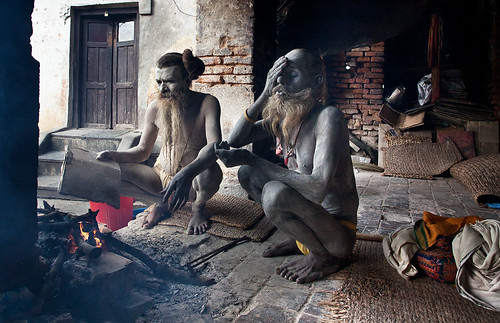
Naga Sadhus, Nepal.  By Harry Fisch


Los Nagas Sadhus son los Sadhus  desnudos, cubiertos solamente con un "vibhuti" o cenizas sagradas. Dejan crecer su pelo en bucles llamados "jata". Un sadhu (Saa-dhu) es un asceta hindú que sigue el camino de la penitencia y la austeridad para obtener la iluminación. Es la cuarta fase de la vida en la religión hindú, después de estudiar, de ser padre y de ser peregrino.
La tradición sadhu consiste en renunciar a todos los vínculos que los unen a lo terrenal o material en la búsqueda de los verdaderos valores de la vida.

 Han dejado atrás todas las ataduras materiales para liberarse a un mundo con la realidad divina, y viven en cuevas, bosques y templos por toda la India. Existen alrededor de 4 ó 5 millones de sadhus hoy en día en el país, y son personas respetadas, veneradas e incluso temidas. Son mantenidos por los ciudadanos que les donan alimentos.Por norma general un shadu vive incluido en la sociedad, pero intenta ignorar los placeres y dolores humanos. 

ENGLISH

 Those are naked Naga (Digambar, or "sky-clad") Sadhus which are non-shaven and wear their hair in thick locks, and Jata, who carry swords[citation needed]. Sadhus are sanyasi, or renunciates, who have left behind all material and sexual attachments and live in caves, forests and temples all over India and Nepal. There are 4–5 million sadhus in India today and they are widely respected for their holiness,[3] and sometimes feared for their curses. It is also thought that the austere practices of the sadhus help to burn off their karma and that of the community at large. Thus seen as benefiting society, sadhus are supported by donations from many people. However, reverence of sadhus is by no means universal in India. Historically and contemporarily, sadhus have often been viewed with a certain degree of suspicion, particularly amongst the urban populations of India. Today, especially in popular pilgrimage cities, posing as a sadhu can be a means of acquiring income for non-devout beggars.

Propuesta a National Geographic

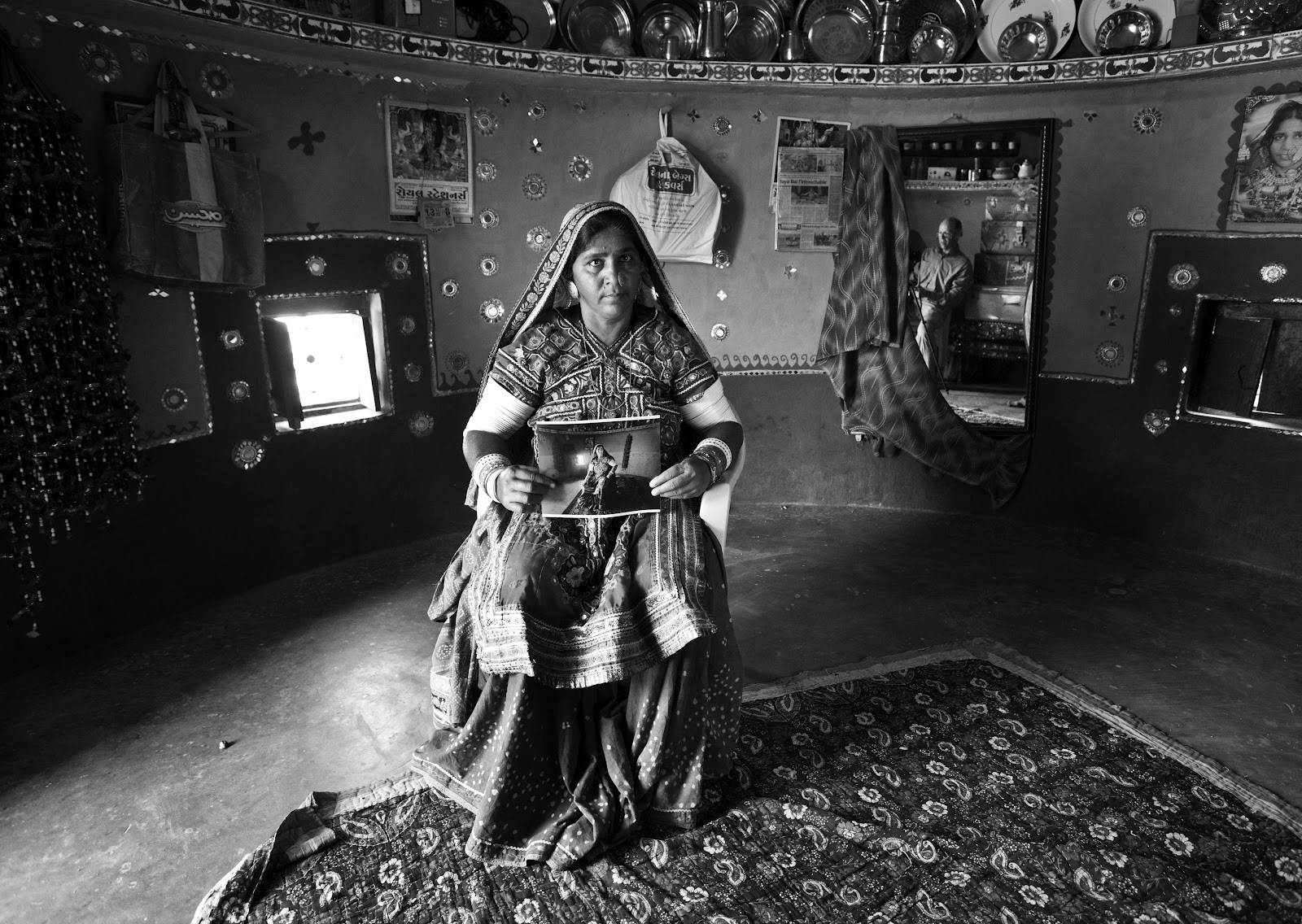
Me he animado a mandar a National Geographic la foto de la dama de Hodka posando sosteniendo en su mano su propia foto que tomé el año pasado. Me temo que en NG no la han recibido con el mismo entusiasmo que tuve yo al concebirla...  Y eso que me empeñé en hacer un "Meninas" étnico. 
Otra vez será .

My biased enthusiasm for the Hodka woman picture holding her own picture taken last year has not been shared by the NATIONAL GEOGRAPHIC jury. It seems that the ethnical  "Meninas" style didn't touch the heart of the great magazine. Next time perhaps.


En esta ocasión hice una jornada completa de viaje para llegar al poblado Hodka y volver visitar al jefe del poblado en el que estuve durmiendo el año pasado.Tenía la obsesión de repetir la foto que hice el año pasado con ella sujetando entre las manos la foto del año anterior.


This year I made a long journey with the only purpose of reaching Hodka and taking, again, the picture of the same lady at the same place, holding last year's picture. I was curious about the result of an "objective" and formal approach in such an exhotic place.


Este año, la choza había cambiado notablemente. Y su actitud también: "tempora mutantur, et nos mutamur in illis" .  La vivienda se ha convertido en una auténtica habitación de un "resort" étnico de vacaciones.  !Tenía hasta espejo! (Me vino al pelo para la foto tipo Meninas).

Recuerdo que el año pasado, casi le hacía ilusión posar con toda la parafernalia. La sesión duró un par de horas y teníamos que luchar contra los pocos curiosos que se empeñaban en mirar desde la puerta, tapando la luz natural.


The house was changed. So did the lady's attitude. The place was transformed into a touristic ethnical summer "resort". We even had a mirror that helped me  to replicate Velazquez's Meninas...


Ya veremos si tengo más suerte con la foto de la foto de la foto de 2012...


Selección


"Les lettres de la photographie", el MEJOR BLOG del año 2011 de acuerdo con la revista LIFE, ha seleccionado la serie "Benarés The other side". La selección ha sido realizada por David Faheys, de la galeria Fahey/Klein Gallery de Los Angeles.

"Les lettres de la photographie" has been awarded by LIFE magazine as the winner of the best fotoblog of 2011.  "Les lettres.." has selected the series · Benares the other side" and the selection has been made by David Faheys, from the Fahey/Klein gallery of Los Angeles.


Desayuno en el monasterio


Me levanto a las 4:15. El baño es de tipo hindú: la ducha cae sobre toda la zona. El peligro es el agua por todas partes. Resbaladizo. Me muevo con cuidado. La ventana no tiene cristal. El agua mas bien tirando a fría . Una vez en mi cuarto oigo rezar -en voz alta, muy alta - a un guía Nepalí que duerme al lado.
- Este no me despierta, me digo... (llevo despierto desde las 4:00)

La Puja (ceremonia) de las seis, impresionante y luego el desayuno con un par de monjes y la suiza de USA (mirad el dia anterior). Nos reimos con los monjes y terminamos haciendonos una foto - ademas de las otras , mas serias - el monje y yo. Quedamos en cartearnos  por e-mail o Facebook...

_______________________________________

The supreme sacred place known as Namo Buddha is located in the mountains about 2 ½ hours from Kathmandu. It is one of the most important Buddhist pilgrimage sites in Nepal and one of the holiest in the world. It is known as the place where the Buddha, in a previous life as a prince, gave his body to a starving tigress and her cubs. There is a very old temple in the village of Namo Buddha, located below Thrangu Rinpoche’s land, which sits on the top of the mountain. Several lamas have determined that the actual site where the Buddha gave his body is actually on Thrangu Rinpoche’s property near the retreat center. There is a cave with statues of the prince, the tigress and the cubs on this site. Namo Buddha is otherwise known by Tibetans and people of the Himalayan regions as “Takmo Lu Jin”, which is literally “Tigress Body Generosity”.